Franco E. Pacho
I’m going to get real with you guys for a second: I just got laid off 2 weeks ago (it was one week when writing this piece). To be completely honest, it did suck. Like hard… but it was not as suckiest as it could be.
And you want to know why?
Because I’m a little doomsaying-paranoid and always think it can happen at any time. And… it can—that’s a hard truth—it always can be your last week on your job.
Obviously, thinking like this is not a sane mentality to have, nevertheless in this document you’ll find Image 1.1, a quick guide on how not to melt under one’s own of constantly feeling the lingering shadow of unemployment.
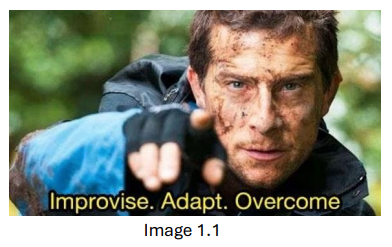
Words to live by, truly. It didn’t suck so hard because I didn’t wait for it to happen to resume—pun intended—work on my resume and portfolio. I worked on personal projects. Networked. Improved my skills and my craft to keep my options available, and was attending online portfolio reviews on GameDev Discord, using what I saw while on the inside to present my work with the required format and criteria.
Occupational therapy? Perhaps! but it works. It’s walking your path to improvement at your own pace without the time constraints and formality of a work schedule. So, when the time came, I already had some responses from job applications in my mail, and those rejecting me had ACTIONABLE FEEDBACK. There were contacts outside of my work circle, ready to lend a hand with advice or linking me job applications that are a good match
with my experience. Most importantly, besides saving money to last while finding new work that is (PLEASE ALWAYS SAVE MONEY), I had already built momentum. A rhythm already established that kept me going when the bad news struck my motivation right in the heart.
And I did all this because there is a big problem with all the work you do on the inside—and it’s quite common—everything, and I MEAN EVERYTHING, is under NDA (At least on writing/Translation, in my experience).
So how do you showcase that experience, all that art/writing/programming/design that you been doing the whole time?
The short answer is:
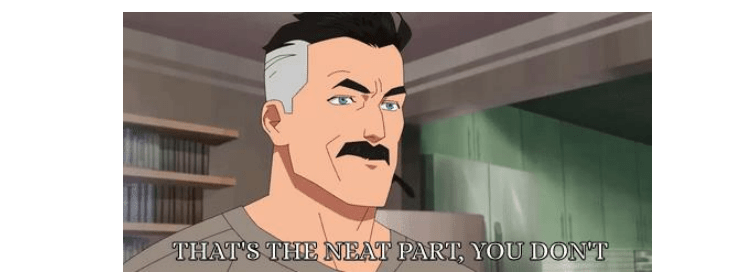
The long answer is you don’t for the most part. Sometimes you can show the tip of the iceberg or just a simple “I worked on this” but is on a case-by-case basis. You can make some bullet points on your resume that describe what you did, but show don’t tell applies here as well. That’s why it’s always better to keep working on projects of your own. You detach your work from your work, and it becomes a more pleasant experience. I hope that makes sense.
I worked on all this while still employed, and it was not until 6 months of work that I found myself on a spot where I was confident my work would land me something better. I’m sharing this to show how bad it would’ve been if I had started this only 2 weeks ago when I was laid off. Thankfully I got positive responses and now I’m part of some interesting projects once again.
Luck? Maybe, but better be prepared when bad luck knocks on your door. Never stop working on yourself, get your whole body in once you have a foot inside this industry. If you have the money to enlist in bootcamps, do it. It’s always a plus to show that you are still working while working. You’ll never know when it’s time to go back to image 1.1.

ENTRY LVL
Hey that’s us! Resources, Community, co-working, feedback. We are here to help! Discord Here!

Funsmith Club.
These guys host bootcamps, Volunteer opportunities, and Playtest sessions. Good Networking all around. Discord Here!
Work With Indies.
They host a Job Board, a LOT of resources, and a weekly portfolio Review with an industry pro among other things. Discord Here!
 HOME
HOME 
Leave a comment